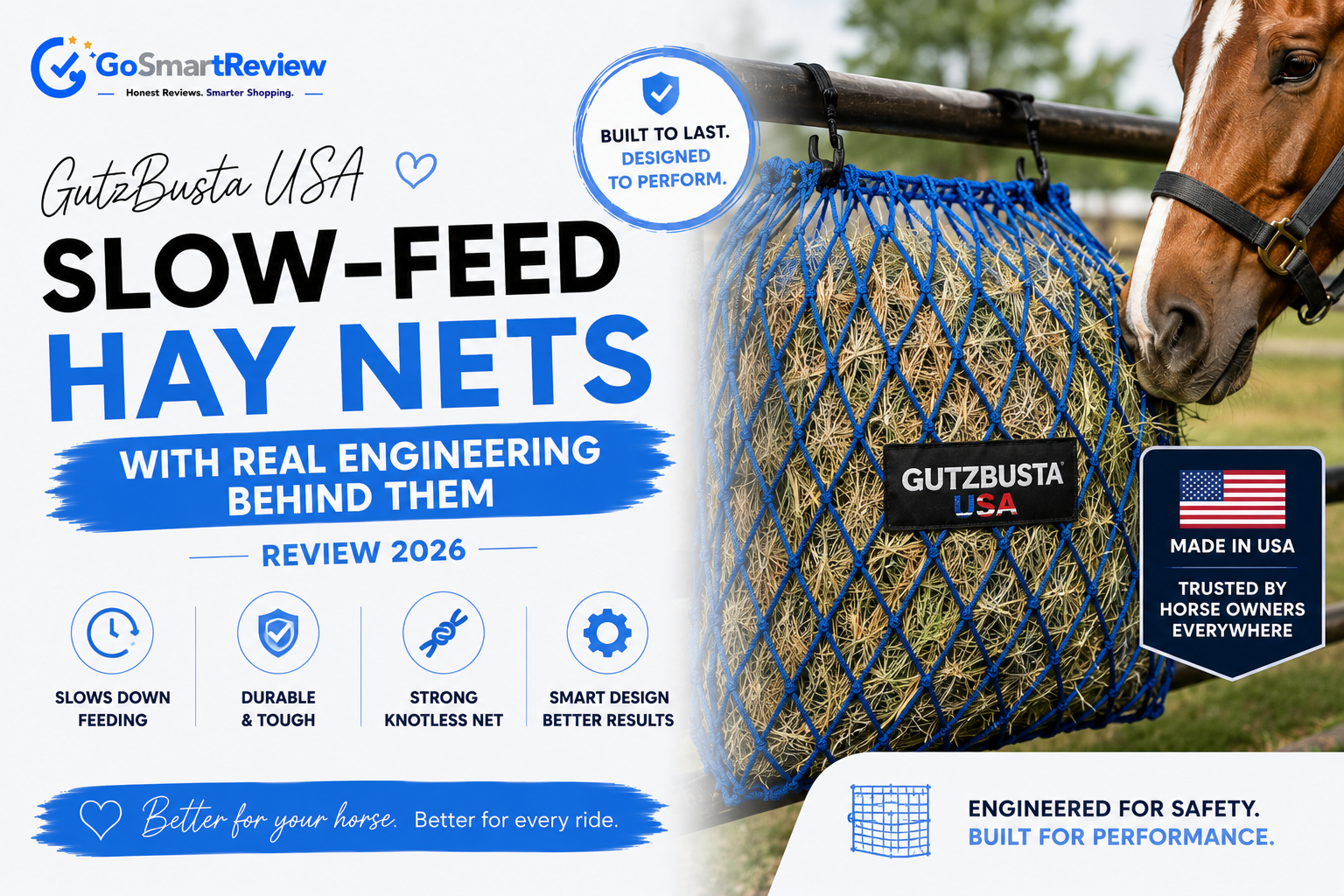
Gutzbusta USA Review — Slow Feed Hay Nets with Real Engineering Behind Them
An Australian equine brand's US storefront selling slow feed hay nets engineered to cut hay waste and reduce choke risk. Here's what's genuinely backed by specifics, and what to know before choosing a hole size.
Gutzbusta USA at a glance
Gutzbusta is an established Australian equine brand (also selling in Australia, New Zealand, and the UK) whose US storefront ships from a warehouse in Rockwall, Texas. Its core product is slow feed hay nets and round bale nets designed to reduce hay wastage and slow down how fast horses eat.
Where Gutzbusta earns it — and what actually matters when buying
- Material specs are genuinely detailed — 48–60ply UV-stabilized polyethylene for knotted nets, up to 240ply polypropylene for knotless — not vague "heavy duty" language
- The square-mesh construction is a specific, explained design choice meant to resist stretching compared to diamond-mesh competitors
- An established brand with per-product review counts in the hundreds and a stated multi-year lifespan under daily use
- The "46% less hay waste" claim is tied to a described mechanism (slower, controlled bites) rather than an unexplained number
- Upfront cost is real — a quality hay net costs meaningfully more than simply feeding loose hay or a cheap generic net
- Choosing the wrong hole size is the most common reason owners end up dissatisfied — sizing needs some research specific to your horse
- The brand's own "competitor comparison" blog content is self-published marketing, not independently verified testing
- Despite the "USA" branding and Texas shipping, this is fundamentally an Australian company, and the listed customer service phone number is an Australian one
What's in the Gutzbusta catalog
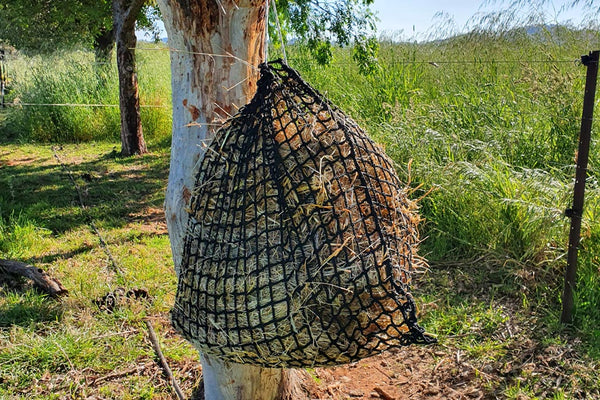
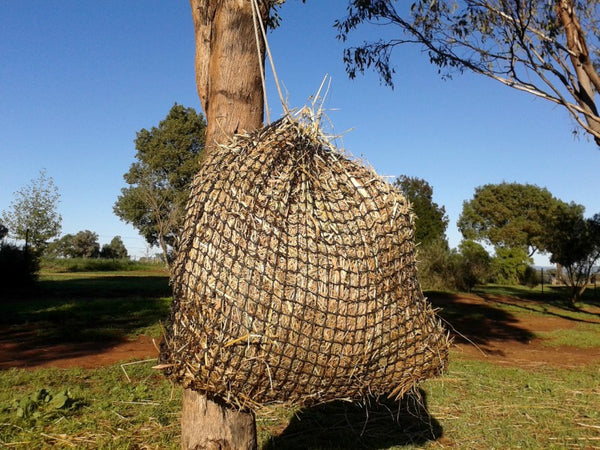
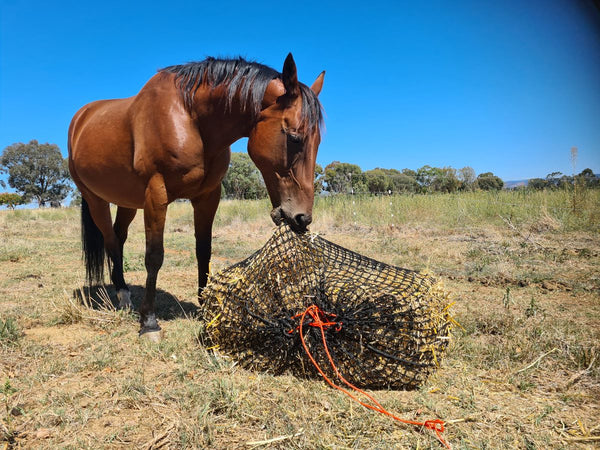
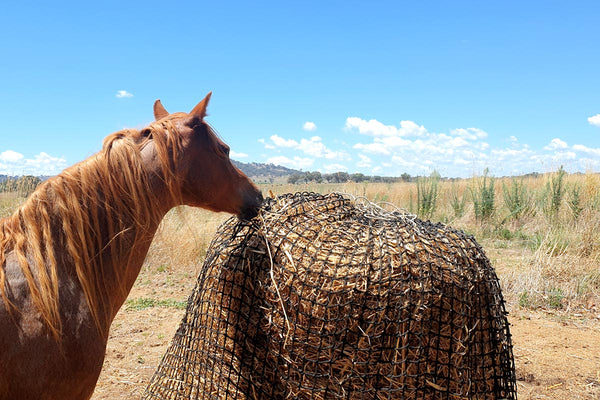
The core range runs from standard stall/paddock nets to full round bale nets:
Why the engineering claims mostly check out
"46% less hay waste" is tied to an explained mechanism
The claim rests on slower, controlled bites reducing how much hay gets trampled, dropped, or soiled compared to loose feeding — a specific causal explanation rather than an unexplained percentage.
Square mesh vs. diamond mesh is a real, specific design distinction
Gutzbusta's square-mesh construction is described as resisting stretching and collapsing under tension better than diamond-mesh nets, which the brand says can distort and increase entanglement risk as they wear — a plausible, checkable engineering claim.
Ply counts and materials are disclosed per product line
Knotted nets are listed at 48–60ply UV-stabilized polyethylene, while knotless nets go up to 240ply polypropylene — specific numbers you can compare against other brands, rather than a generic "durable" claim.
Hole size, not brand, is the biggest factor in satisfaction
The company's own FAQ and blog content stresses that hole size depends on the individual horse's health needs and grazing habits — worth reading before ordering, since the wrong size is a common source of disappointment regardless of net quality.
When to buy — and what to double-check
✔ Gutzbusta is a great fit if you
- Own horses or livestock and want to reduce hay waste and slow down overeating for health reasons like choke, colic, or metabolic conditions
- Are willing to pay more upfront for netting engineered with safety-conscious mesh design
- Will read the hole-size guide and pick correctly for your specific animal rather than guessing
- Are fine ordering from a US storefront backed by an Australian parent company
✘ Consider elsewhere if you
- Only feed in a fully controlled setting where hay waste isn't a real cost concern
- Want the cheapest possible net regardless of mesh engineering differences
- Need same-timezone, immediate phone support rather than an Australian-hours contact number
- Have a horse that has historically destroyed every hay net tried, and may need a net paired with an additional feeder or ring for extra protection
Gutzbusta vs. other hay-feeding options
| Option | Price tier | Known for | Best for |
|---|---|---|---|
| Gutzbusta | $30–$56+ (nets), $206+ (round bale) | Square-mesh engineering, high ply count, established brand | Owners wanting a safety-engineered, long-lasting slow feeder |
| Generic imported hay nets | $15–$30 | Cheaper diamond-mesh construction | Budget buyers accepting more entanglement/durability risk |
| Traditional loose/flake feeding | $0 equipment cost | No net or special equipment needed | Owners not concerned about hay wastage or slow-feeding benefits |
Quick answers
Is Gutzbusta a legitimate company?
Yes — it's an established Australian equine brand with a dedicated US storefront, a Texas-based warehouse for domestic shipping, and per-product review counts in the hundreds going back years.
Is Gutzbusta actually a US company?
Not originally — it's an Australian brand (also selling in Australia, New Zealand, and the UK) that ships US orders from Rockwall, Texas. The listed customer service phone number is an Australian one, which is worth knowing if you need to call rather than email.
How do I pick the right hole size?
It depends on your horse's individual grazing behavior, health conditions, and how quickly they typically eat. Gutzbusta publishes a dedicated hole-size guide, and their support team will help if you're still unsure — this decision matters more to satisfaction than which specific net you buy.
What if my net gets a hole?
Nets ship with a repair string, and the brand recommends checking daily so small holes can be repaired before a horse works them into a bigger one — routine maintenance rather than a sign of a defective product.
8.0/10 — Genuine engineering behind a niche product, with sizing as the real decision
Gutzbusta's core claims hold up well: material specs are specific and disclosed, the square-mesh design is a real engineering choice rather than marketing filler, and the brand has a long enough track record to back its multi-year lifespan claims. The honest caveats are practical rather than about product quality — a quality hay net costs more upfront than loose feeding, this is fundamentally an Australian company despite the "USA" storefront, and picking the wrong hole size is the most common reason owners end up unsatisfied. If you take the time to size correctly for your horse, this is a well-engineered, specifically documented option in a category where a lot of competitors rely on vague durability claims.
Shop Gutzbusta →