
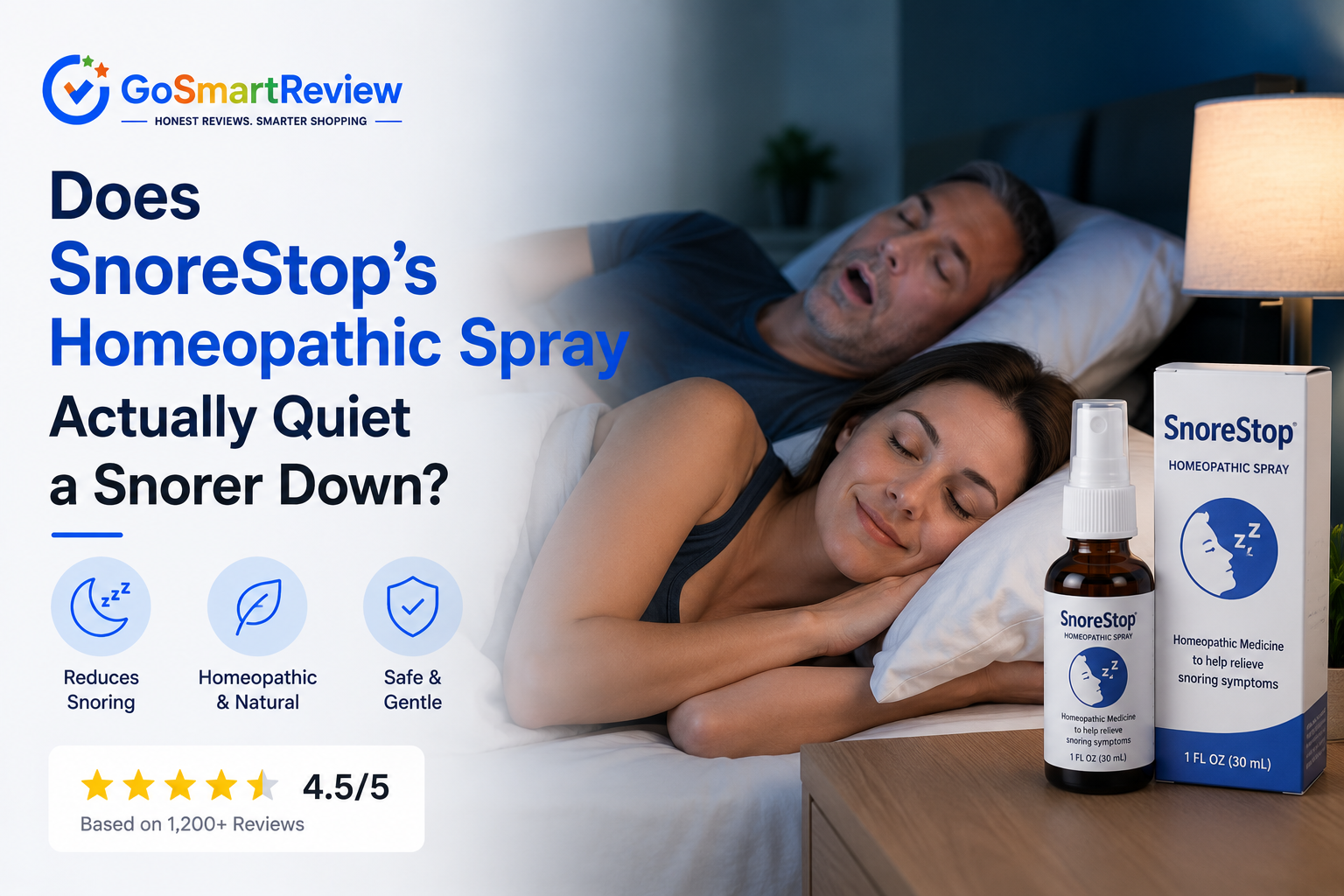
Does SnoreStop's homeopathic spray actually quiet a snorer down?
SnoreStop has been sold as a device-free alternative to nasal strips, mouth tape, and chin straps since 1995. It's a homeopathic formula, not a conventional drug, and the brand is upfront that it targets everyday snoring rather than sleep apnea. Here's what it actually is, what it costs, and where the evidence is thinner than the marketing.
What is SnoreStop?
SnoreStop is an over-the-counter homeopathic snoring line manufactured by Green Pharmaceuticals Inc. and originally developed by Dr. Kenneth Rifkin in 1995. Instead of a physical device like nasal strips or a mouth guard, it's taken as a bedtime spray or chewable tablet, prepared according to Homeopathic Pharmacopoeia of the United States (HPUS) standards, with ingredients recognized as GRAS (generally recognized as safe) and manufactured in FDA-regulated facilities.
What you get, what you give up
- Device-free — no straps, tape, or mouth guards to get used to overnight
- Low physical risk: no known stimulants, and the brand reports no known side effects at the labeled dose
- Simple bedtime routine — a spray or chew-and-go tablet takes under a minute
- Separate formulas exist for allergy-driven and congestion-driven snoring, not just one generic product
- Long market history (since 1995) gives it a longer track record than most newer snoring gadgets
- A pet version exists for households dealing with a snoring dog or cat
- It's a homeopathic product with active ingredients diluted to trace amounts — homeopathy as a category is viewed by most of mainstream medicine as lacking strong evidence beyond a placebo effect
- The brand's "medically proven" and effectiveness-percentage claims come from the company's own cited study, not an outcome independently verified in this review
- It explicitly does not treat sleep apnea, a distinct and more serious medical condition
- Results depend on consistent nightly use for at least 5–7 nights before you can judge if it's working
- Pricier than some nasal strip or basic mouth-guard alternatives on a per-month basis
What's actually in the shop
The brand's stated approach
Three airway locations
SnoreStop positions itself around the idea that snoring can start in the mouth, the back of the throat, or the nose, and offers different products aimed at each.
Homeopathic dilution
Active ingredients are prepared at HPUS potencies like 4X, 6X, and 12X — meaning only trace, highly diluted amounts of each ingredient are present in a dose.
A 5–7 night trial window
The brand recommends consistent nightly use for at least 5 nights before evaluating results, rather than expecting an effect from a single use.
Take it away from food and water
Both formats are meant to be used at least 30 minutes apart from food, water, or other medication, and not combined with alcohol or sedatives at bedtime.
SnoreStop is a homeopathic product. Homeopathy as a category is generally regarded by mainstream medical and scientific bodies as lacking strong evidence of effectiveness beyond a placebo response, largely because active ingredients are diluted to trace amounts. The brand's specific effectiveness figures and "medically proven" language come from studies the company itself cites — this review has not independently verified those results.
SnoreStop is intended only for simple, non-apneic snoring. It is not designed to diagnose, treat, or prevent obstructive sleep apnea (OSA), a distinct medical condition. If you experience gasping, choking, pauses in breathing, or excessive daytime sleepiness, talk to a healthcare professional rather than relying on an OTC product — and never stop or change a prescribed treatment like CPAP without your doctor's guidance.
When it might help — and when to see a doctor instead
✔ Worth trying if you
- Have simple, occasional snoring with no signs of gasping or breathing pauses
- Have already ruled out sleep apnea, or know your snoring isn't apnea-related
- Dislike wearing tape, strips, or mouth guards overnight
- Want to try a low-risk option before investing in a more expensive device
✘ Skip it and see a doctor if you
- Experience gasping, choking, or breathing pauses during sleep
- Deal with excessive daytime sleepiness despite a full night's sleep
- Are already on a prescribed treatment like CPAP — don't substitute an OTC product for medical care
- Are pregnant, breastfeeding, or on medication — the brand recommends checking with a doctor first
SnoreStop vs. other common snoring aids
| Option | Type | Typical cost | Best for |
|---|---|---|---|
| SnoreStop | Homeopathic spray/tablet | $24.99–$59.99 | Device-free, low-risk trial for simple snoring |
| Nasal strips | Adhesive device | ~$10–$15 / box | Nasal-only airflow restriction |
| Mouth guard / MAD | Physical device | ~$50–$150+ | Jaw-position-related snoring |
Quick answers
Does SnoreStop treat sleep apnea?
No. The brand is explicit that SnoreStop is designed for simple, non-apneic snoring, not sleep apnea, which is a distinct and more serious medical condition requiring professional diagnosis and treatment.
How long before I'd know if it's working?
The brand recommends at least 5 consecutive nights of consistent use before evaluating results, with some users reporting a difference sooner and others taking the full week.
Is it actually "medically proven," as the packaging says?
That language reflects the company's own cited research, including a study it describes as randomized and placebo-controlled. This review hasn't independently verified that study, and it's worth noting that homeopathic products broadly face skepticism from mainstream medical bodies regarding evidence of efficacy.
Spray or tablets — which should I pick?
Functionally similar, so it comes down to preference: the spray reaches the mouth and throat directly, while the tablets suit people who prefer a chewable routine over a spray.
7.2/10 — A reasonable low-risk trial, with the marketing running ahead of independently verified evidence
SnoreStop's biggest practical advantage is that it's genuinely device-free and simple to use, with a three-decade market history behind it. But it's still a homeopathic formula, and this review can't independently confirm the specific effectiveness figures in the brand's marketing. If you're dealing with straightforward, occasional snoring and want to try something low-risk before a physical device, it's a reasonable place to start — just don't use it as a substitute for medical evaluation if your symptoms point toward sleep apnea.
Shop SnoreStop →