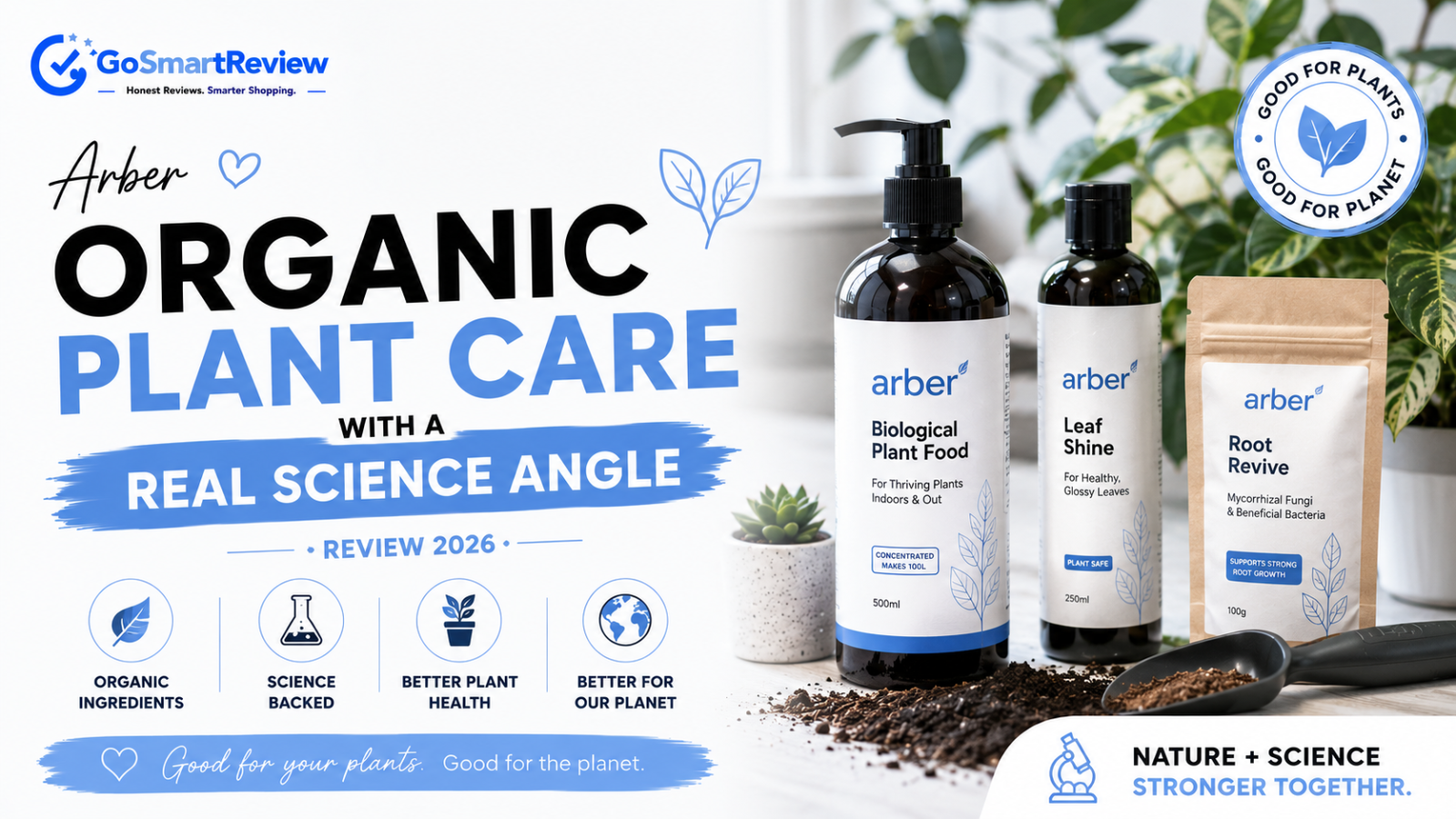
Arber Review — Organic Plant Care with a Real Science Angle
A biological plant food, pest control, and lawn care line built to replace synthetic chemicals — now sold at Target, Home Depot, and Walmart. Here's what checks out, and where results get more mixed.
Arber at a glance
Arber is an organic "plant wellness" brand founded in Venice, California, built around biologicals — naturally occurring bacteria and organic compounds — instead of synthetic pesticides and fertilizers. It covers houseplants, outdoor gardens, and lawns with a concentrate-based product line.
Where Arber earns it — and what to expect
- Uses "biologicals" — beneficial bacteria and organic compounds — as an actual mechanism, not just "natural" marketing language
- OMRI Listed and certified organic under the USDA National Organic Program — a real, third-party-verified claim
- Sold in major national retailers (Target, Home Depot, Walmart) in addition to direct-to-consumer, not just an online-only brand
- Concentrate format is a genuine value angle — one 16oz bottle makes up to 16 gallons of ready-to-use solution
- Independent reviews are more mixed at the individual-plant level than average ratings suggest — some reviewers report no visible change, or worse results
- Biological products generally act more slowly than synthetic fertilizers or pesticides — a real trade-off for going chemical-free
- Per-ounce price runs higher than big-box synthetic lawn and garden chemicals
- A newer, VC-backed brand (founded 2020) with a shorter track record than legacy organic garden brands
What's in the Arber catalog
The core line is four concentrates that cover feeding, pest control, disease control, and overall plant immunity, plus bundles for specific use cases:


Why the "organic wellness" story mostly checks out
"Biologicals" describes a real, different mechanism
Rather than synthetic chemical pesticides, Arber's formulas rely on naturally occurring bacteria and organic compounds to prevent disease and pests — a genuine mechanistic difference from most conventional lawn and garden chemicals, not just softer branding on the same ingredients.
The organic certification is independently verified
Products carry OMRI Listed status and certification under the USDA National Organic Program — third-party verification rather than a self-applied "organic" label.
Average ratings look stronger than individual experiences suggest
Most product pages show high average star ratings, but independent platforms like Thingtesting include reviewers reporting no noticeable improvement, or in at least one case, plants declining after use — a reminder that biological products can be more sensitive to dosing, plant type, and growing conditions than a single average score conveys.
Going chemical-free is a genuine trade-off, not a free upgrade
Biological pest and disease control generally works more gradually than synthetic chemicals, and may need more consistent, repeated applications to see comparable results — a fair trade for lower chemical exposure, but worth knowing if you're expecting an overnight fix for a severe problem.
When to buy — and what to double-check
✔ Arber is a great fit if you
- Want to avoid synthetic pesticides and fertilizers around kids, pets, or edible gardens
- Are willing to apply consistently and give biological treatments time to work
- Like being able to pick up products at Target or Home Depot rather than waiting on shipping
- Value the concentrate format for cost-per-use and reduced plastic waste over time
✘ Consider elsewhere if you
- Need fast, dramatic results for a severe pest outbreak or a badly declining lawn
- Are comparing strictly on per-application cost against big-box synthetic products
- Had a disappointing result with a specific product and want a straightforward, single-nutrient fertilizer instead
- Are treating a very large lawn area where cost could add up faster than with bulk conventional products
Arber vs. other lawn and garden care options
| Brand | Price tier | Known for | Best for |
|---|---|---|---|
| Arber | $25–$180 | OMRI-listed biologicals, science-forward positioning | Buyers wanting a certified-organic brand available at major retailers |
| Espoma Organic | $15–$40 | Decades-old organic garden brand | Buyers wanting a longer-established organic track record |
| Scotts (synthetic) | $20–$60 | Fast-acting synthetic lawn and garden chemicals | Buyers prioritizing speed of results over organic ingredients |
Quick answers
Is Arber a legitimate company?
Yes — it's a venture-funded, actively operating business sold direct and through major retailers including Target, Home Depot, Walmart, and Amazon, with independently verified organic certification on its products.
Is Arber actually organic and non-toxic?
Its products carry OMRI Listed status and certification under the USDA National Organic Program, which is a genuine third-party verification rather than a self-applied marketing claim.
Why do some reviewers say a product didn't work, or even harmed their plants?
Biological products can be more sensitive than synthetic chemicals to dilution accuracy, plant type, and growing conditions, and results vary more between individual reviewers than the average star rating suggests. If a product doesn't seem to be working, double-check the dilution ratio and application frequency against the current label instructions before assuming the product itself is at fault.
Does Arber work for lawns, or just houseplants?
Both — alongside its houseplant-focused kits, Arber sells a dedicated outdoor line including Organic Fungicide and Insecticide for Grass, Trees & Shrubs, an All Purpose Fertilizer, and a bundled Ultimate Lawn Care set.
7.6/10 — A genuinely science-backed organic brand, with realistic expectations needed
Arber's core pitch holds up: it uses actual biological mechanisms rather than vague "natural" language, carries real third-party organic certification, and has earned shelf space at major retailers rather than staying online-only. The honest caveat is that, like most biological plant care, results are more gradual and more variable between individual plants and lawns than synthetic chemical alternatives — and a handful of independent reviewers report disappointing results with specific products. If avoiding synthetic chemicals matters to you and you're willing to apply consistently, this is a legitimate, well-certified option; if you need a fast fix for a severe problem, it's worth comparing against a faster-acting synthetic product first.
Shop Arber →